
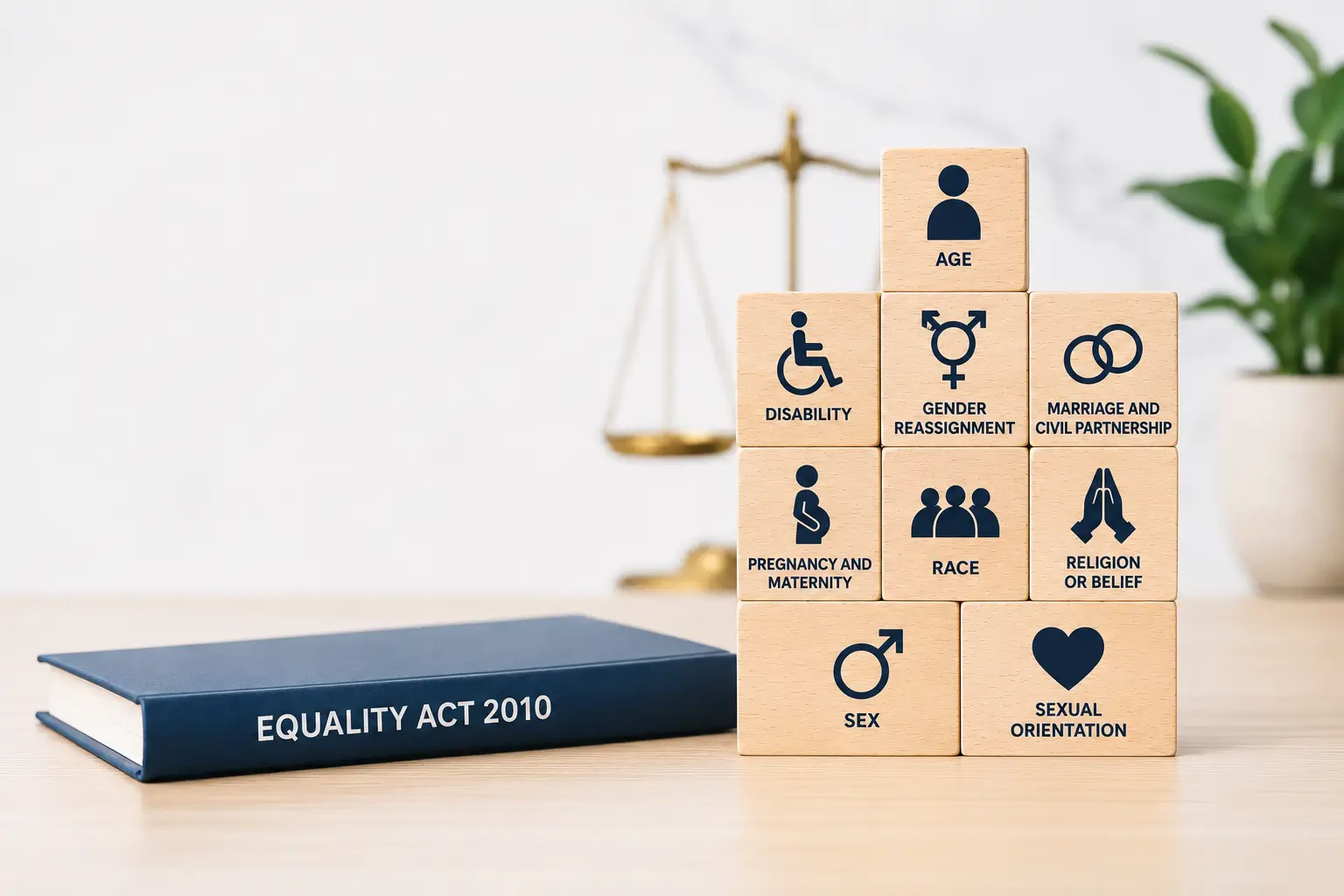
A protected characteristic is a personal characteristic protected by the Equality Act 2010. The 9 protected characteristics are listed in section 4 of the Equality Act.
If you have been offered a settlement agreement, protected characteristics may be relevant if you believe you have been treated badly because of who you are, your personal circumstances, or something connected with one of those characteristics.
For example, protected characteristics may be relevant if your settlement agreement follows:
redundancy;
dismissal;
a grievance;
sickness absence;
maternity leave;
workplace conflict;
a performance process; or
a protected conversation.
You do not need to use legal language when explaining what happened. However, it can be helpful to understand whether your treatment may be connected with one of the protected characteristics.
The 9 Protected Characteristics
There are 9 protected characteristics under the Equality Act 2010.
1. Age
Age means a person’s age or age group.
This could include being treated less favourably because you are young, older, approaching retirement age, or within a particular age bracket.
In a settlement agreement context, age may be relevant if, for example, you believe you were selected for redundancy, managed out, or treated differently because of your age.
2. Disability
A person has a disability if they have a physical or mental impairment which has a substantial and long-term adverse effect on their ability to carry out normal day-to-day activities.
This can include physical conditions, mental health conditions, progressive conditions and long-term illnesses.
Disability may be relevant to a settlement agreement if your employment is ending after sickness absence, performance concerns, capability proceedings, requests for adjustments, or difficulties connected with a health condition.
3. Gender Reassignment
Gender reassignment protects people who are proposing to undergo, are undergoing, or have undergone a process of changing sex.
An employee does not need to have had medical treatment to be protected.
This may be relevant if the employee believes they have been treated badly because they are trans or because of something connected with gender reassignment.
4. Marriage and Civil Partnership
This protects employees from being treated less favourably because they are married or in a civil partnership.
This characteristic is narrower than some of the others. It does not cover being single, divorced, engaged or cohabiting.
5. Pregnancy and Maternity
Pregnancy and maternity protect employees from being treated unfavourably because of pregnancy, pregnancy-related illness, maternity leave or matters connected with maternity.
This may be relevant if a settlement agreement is offered during pregnancy, maternity leave, or shortly after returning to work.
It may also be relevant if redundancy, dismissal or changes to role appear to be connected with pregnancy or maternity leave.
6. Race
Race includes colour, nationality, ethnic origins and national origins.
Race discrimination may be relevant if you believe you have been treated differently because of your race, ethnicity, nationality, accent, cultural background or immigration-related assumptions.
7. Religion or Belief
Religion means any religion. Belief can include religious or philosophical beliefs. It can also include a lack of religion or belief.
This may be relevant if you believe your employer has treated you badly because of your faith, your beliefs, your lack of belief, or because of something connected with those beliefs.
8. Sex
Sex means whether someone is a man or a woman.
Sex discrimination may be relevant if you believe you have been treated less favourably because you are male or female.
It may also be relevant in cases involving unequal treatment, assumptions about caring responsibilities, pregnancy-related issues, harassment, or workplace culture.
9. Sexual Orientation
Sexual orientation means a person’s sexual orientation towards people of the same sex, the opposite sex, or either sex.
This may be relevant if you believe you have been treated badly because you are gay, lesbian, bisexual, heterosexual, or because of assumptions about your sexual orientation.
The Equality and Human Rights Commission also provides guidance on protected characteristics and discrimination under the Equality Act.
Why Protected Characteristics Matter in Settlement Agreements
Protected characteristics matter because they may affect the strength and value of any employment claims you are being asked to give up in the settlement agreement.
Most settlement agreements require you to waive a wide range of claims, including discrimination claims. If the background to your settlement agreement involves possible discrimination, that may be relevant when considering:
whether you have potential claims under the Equality Act 2010;
whether your negotiating position is stronger;
whether the wording of the agreement needs changing;
whether the tax treatment of compensation needs careful consideration; and
whether you need specific protections, such as an agreed reference or confidentiality wording.
A settlement agreement is not only about the amount of money offered. It is also about what claims you are giving up and whether the agreement properly protects your position.
Examples of When Protected Characteristics May Be Relevant
Protected characteristics may be relevant if:
you were selected for redundancy shortly after announcing pregnancy;
your employment ended after disability-related sickness absence;
you were criticised for performance issues linked to a medical condition;
your employer ignored requests for reasonable adjustments;
you were treated differently because of your age;
comments were made about your race, nationality, religion, sex or sexual orientation;
you were excluded, disciplined or dismissed after raising discrimination concerns;
your role changed after maternity leave; or
you were offered a settlement agreement after making a grievance about discrimination.
These examples do not automatically mean that you have a claim. However, they are warning signs that the background should be considered carefully before you sign.
What Should You Tell Your Settlement Agreement Solicitor?
If you think a protected characteristic may be relevant, tell your solicitor as early as possible.
It may help to explain:
what happened;
when it happened;
who was involved;
what was said or done;
whether there are emails, messages or documents;
whether anyone else was treated differently;
whether you raised a grievance; and
how the treatment affected your decision to consider the settlement agreement.
Your solicitor can then consider whether the issue affects your advice, your negotiating position, or the wording of the settlement agreement.
Need Advice on a Settlement Agreement?
Before you sign, speak to an experienced settlement agreement solicitor.
Call 0330 333 6050 for a free initial consultation, or complete the form below and we will get back to you promptly.
We will explain your options, answer your initial questions, and guide you through the next steps. If you instruct us, your employer will usually contribute towards your legal fees, often covering the full cost of our advice.